Cleaning Supplies Storage in Saudi Arabia: A Safety-First Guide for 2026
Cleaning supplies storage is one of the most overlooked line items in a facilities budget, right up until a leaking drum or a fire inspector forces the issue. In 2026, as Saudi Arabia’s janitorial, hospitality, and facilities-management sectors keep expanding alongside the Kingdom’s giga-projects, distributors and FM companies are sitting on more chemical inventory than ever — often in spaces never designed to hold it safely.
This guide covers what proper cleaning supplies storage actually requires, the risks of getting it wrong, and how to evaluate a facility before committing pallets of chemical stock to it.
Why Cleaning Supplies Storage Needs Special Handling
Commercial cleaning products are not inert. Bleach-based disinfectants, solvents, degreasers, and acidic descalers can react dangerously with one another, off-gas in poorly ventilated spaces, or degrade packaging under heat. A warehouse that is fine for dry paper goods can be genuinely hazardous for a pallet of industrial chemicals.
Distributors supplying hotels, hospitals, and office towers across Riyadh, Jeddah, and the Eastern Province are legally and practically responsible for how that stock is held between delivery and distribution. Poor storage does not just risk spoiled product — it risks staff safety and regulatory penalties.
The Real Risks of Improvised Chemical Storage
- Chemical reactions: incompatible cleaning agents stored side by side can release toxic fumes if containers leak.
- Heat degradation: many surfactants and disinfectant concentrates lose efficacy above certain temperature thresholds.
- Packaging failure: plastic jugs left in direct heat can warp, crack, or swell, especially during Saudi summers.
- Fire risk: some solvent-based products are flammable and need ventilated, temperature-stable storage away from ignition sources.
- Inventory shrinkage: disorganized stockrooms make it hard to track expiry dates, leading to write-offs.
What Happens When Cleaning Chemicals Overheat?
Heat is the single biggest threat to cleaning chemical inventory in the Gulf. Concentrated disinfectants and bleach formulations can lose active ingredient strength rapidly once ambient temperatures climb past manufacturer-recommended thresholds, meaning a product that tests at full potency in January may be significantly weaker by the time it is used in August. For businesses supplying hospitals or food-service clients, that is not a cosmetic problem — it is a compliance one.
Do Cleaning Supply Distributors Need Climate-Controlled Storage?
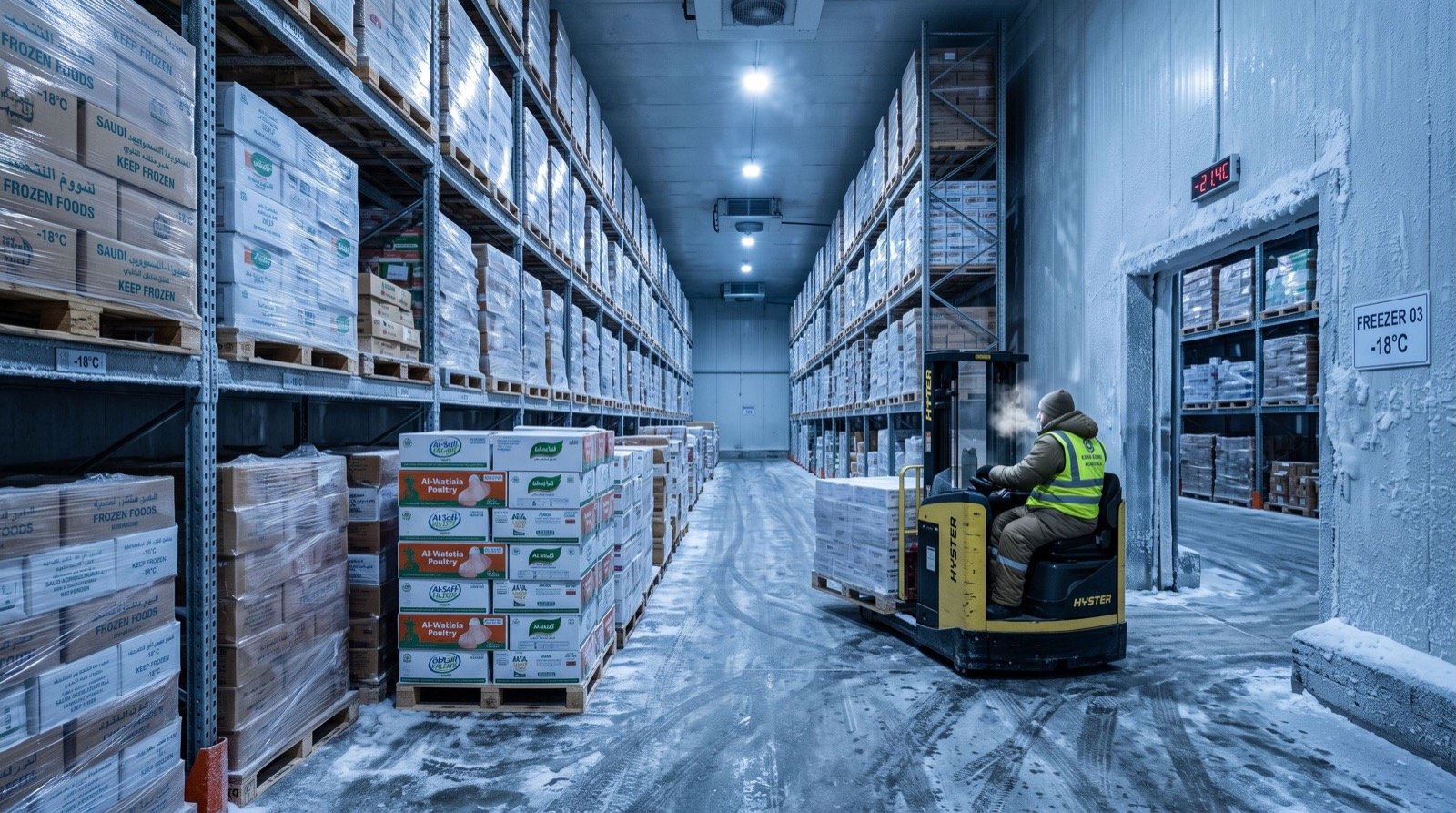
In most cases, yes. Temperature-stable storage keeps chemical formulations within the range manufacturers test and warranty, which protects both product performance and shelf life. Ambient Storage in Jeddah is built specifically to hold this middle ground: not full cold-chain refrigeration, but a consistent, moderate environment that prevents the heat spikes a standard metal warehouse experiences by mid-afternoon.
For distributors who rotate large volumes of bulk concentrate, ambient conditions also reduce the packaging failures that come from repeated heating-and-cooling cycles, which weaken plastic seams and cap threads over time.
Choosing Dedicated Storage for Cleaning Supplies
General-purpose storage units rarely account for the ventilation, chemical-compatible shelving, and spill-containment features that cleaning product inventory needs. A facility offering dedicated Storage for Cleaning Supplies is designed around those requirements from the ground up — segregated zones for incompatible product families, spill-ready flooring, and access control that limits who can handle hazardous stock.
The comparison below outlines how dedicated chemical-aware storage stacks up against the alternatives distributors typically default to.
| Storage Type | Ventilation | Spill Containment | Temperature Stability |
|---|---|---|---|
| Shared office storeroom | Poor | None | Low |
| Open-yard container | Variable | None | Very low |
| Standard dry warehouse | Moderate | Rarely | Low |
| Dedicated cleaning-supplies storage | Good | Yes | High |
A Quick Audit for Your Current Storage Setup
- Are incompatible chemical families (bleach-based vs. acid-based) physically separated?
- Does the space stay below manufacturer-recommended temperature thresholds year-round?
- Is there a spill-containment plan, including absorbent materials on site?
- Are expiry dates tracked and visible, with first-in-first-out rotation enforced?
- Is access restricted to trained staff who understand the material safety data sheets?
If any of these answers is no, it is worth treating storage as a priority project rather than a background cost. The financial exposure from a single spill, fire incident, or spoiled bulk order typically dwarfs the cost of proper storage for years.
Training Staff Who Handle Stored Chemicals
Storage facilities only solve half the problem. The team members who load, retrieve, and rotate chemical stock need basic training on reading material safety data sheets, recognizing warning labels, and knowing which product families must never be placed next to each other. A well-designed storage layout can still be undermined by a warehouse worker who stacks an acid-based descaler beside a chlorine-based disinfectant out of convenience.
Simple, recurring training — even a short quarterly refresher — closes this gap. Pair that with clear signage inside the storage unit itself, and most of the human-error incidents that cause spills or fume exposure become far less likely.
Cost Considerations for 2026 Budgets
Facilities teams evaluating storage costs should weigh three factors together rather than focusing on rent alone: the monthly unit cost, the realistic risk of product loss in a lower-spec alternative, and the compliance exposure if an incident draws regulatory attention. In most cases distributors find that a modest premium for proper ventilation and containment is cheaper than a single year of spoiled bulk stock, let alone the cost of a fire or spill investigation.
Budgeting for 2026 should also account for seasonal demand. Hospitality and facilities-management clients tend to order more cleaning stock ahead of major events and the summer tourism season, so storage capacity needs to flex upward at predictable points in the calendar rather than staying fixed year-round.
When shortlisting a provider, it also helps to confirm you are working with trusted professionals who understand chemical handling requirements rather than a generic self-storage operator unfamiliar with hazardous goods.
Frequently Asked Questions
What is the best way to store cleaning supplies in bulk?
Bulk cleaning supplies should be stored in a temperature-stable, well-ventilated space with segregated zones for incompatible chemical families, spill containment, and clear expiry labeling to support first-in-first-out rotation.
Can cleaning chemicals be stored in a standard self-storage unit?
Some low-risk products can, but concentrated or flammable formulations usually require ventilation and containment features that basic self-storage units do not provide. Always check a provider’s policy before storing commercial chemical stock.
How long do cleaning chemicals last in storage?
Shelf life varies by formulation, but most commercial cleaning concentrates are rated for 12 to 24 months under stable conditions. Heat exposure can shorten that significantly, which is why temperature control matters.
Is climate-controlled storage worth the extra cost for distributors?
For most distributors handling hospital, hospitality, or food-service clients, yes — the cost is small compared to the losses from spoiled stock, failed compliance checks, or a safety incident caused by degraded packaging.
The U.S. Occupational Safety and Health Administration publishes widely referenced guidance on segregating incompatible chemicals and maintaining stable storage conditions, principles that apply equally to Gulf facilities handling similar product lines. Saudi Arabia’s own Vision 2030 program has also accelerated investment in modern logistics infrastructure, giving distributors far more access to purpose-built storage than a decade ago.
Conclusion
Cleaning supplies storage is a safety issue as much as a logistics one, and 2026’s growing facilities-management sector in Saudi Arabia makes it harder to ignore. Run the quick audit above against your current setup, and if gaps show up, move chemical inventory into a properly ventilated, temperature-stable facility before the next summer heat cycle puts it — and your business — at risk.